The LILAC conference was hosted by the University of Sheffield this year from 30th March to 1st April and many of the members from the ILG-New Professionals sub-committee were in attendance. A brilliant three-day event packed full of interesting talks and workshops from inclusive research on gendered student experiences (Laura Woods) and zine-making (Sara Kern, Denise Wetzel and Elliott Rose) to major keynote discussions on AI, misinformation, health literacy and democratic engagement (Sue Lacey Bryant, Sheila Webber and Matteo Bergamini), there was a lot of food for thought!
Some of our new professionals also presented at LILAC this year (Kerrianne Orriss, Léa Watson and Madeleine Williams) and our LILAC rep, Emma Brown, did a fantastic job of helping to organise the event and ensure that it was a success.
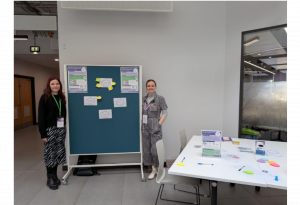
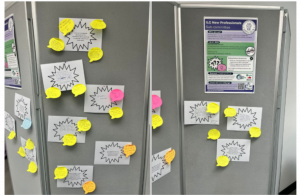
As part of the ILG-New Professionals Welcome stall, we wanted to know what challenges or questions attendees had about information literacy (IL) and to invite people to offer practical solutions (or commiserations!). We had great engagement from attendees – thank you to everyone who took part. General challenges included engaging students in IL teaching, managing workload and responding to emerging issues like AI and information overload. Below are some of the challenges and solutions explored in more detail.
Challenge: Difficulty engaging students in sessions and encouraging attendance at optional IL workshops and drop ins.
Solutions and suggestions:
- Experiment with icebreakers that draw on students’ existing knowledge and interactive approaches to try and encourage engagement (from all students) in sessions. Teaching and learning apps like Mentimeter and Padlet can help!
- Embed IL into courses or co-deliver with academics. Subject-specific workshops can often generate more interest.
- To get buy-in from academics, try to get yourself into department meetings or staff away days.
- Try to get optional IL workshops promoted through various communication channels, such as social media, and make it clear in the descriptions how they are relevant and can help students.
- Are there opportunities within your place of work to award points for students who attend optional sessions and drop ins? In some HE institutions, points can be awarded for extra-curricular activities which students can claim as extra credits.
Challenge: Uncertainty about how to incorporate AI ethically and sustainably into IL teaching and/or whether AI should be used at all
Solutions or suggestions:
- Try to use AI carefully as a learning aid (e.g. examples of AI-generated outputs could be critiqued by students in class discussions or group work).
- Scaffold AI teaching through a variety of AI and non-AI sessions.
Challenge: Managing expectations from academics, students and/or other library members.
Solutions or suggestions:
- Set boundaries for user support. This could look like offering appointment times that library users can book.
- Build peer networks and find allies in the workplace.
- Have clear, open and honest communication with staff members about what you can do within the timeframes they may set.