Guest post

Journal of Information Literacy logo

A Different Perspective on Young People’s Critical Use of Information

This blog post is by Andrew K. Sherton. It highlights the issues from the associated paper, Promoting reflection by students on their use of information. Full-text can be accessed via the link, or via Journal of Information Literacy page. Information professionals who are based in schools and involved in supporting Sixth Formers studying for the […]

A Different Perspective on Young People’s Critical Use of Information Read More »
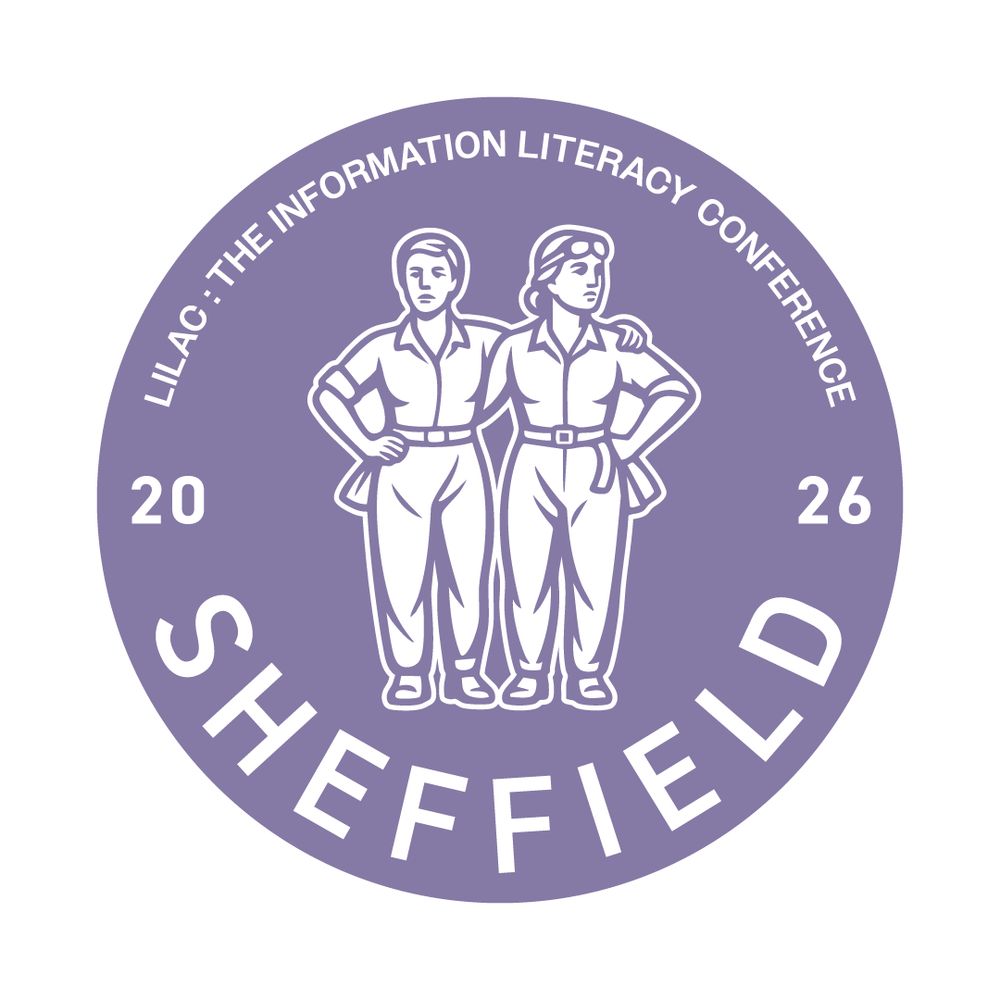
The logo for the LILAC 2026 conference. The logo is circular with a lilac background, all text within the circle is a white colour and all images are white with a lilac outline, to show detail. At the centre of the circle there are two female figures. They are stood facing forwards but looking in different directions. They are wearing overalls and boots. They both have a cloth hanging out of a pocket and the figure on the right has goggles on her forehead. They each have one arm around the other and their other hand is on their own hip. The figures are based on the Women of Steel bronze sculpture that commemorates the women of Sheffield who worked in the city's steel industry during the First World War and Second World War. It was created by the sculptor Martin Jennings. Above the figures are the words LILAC: The information literacy conference, below the figures is the word Sheffield - all words are in capital letters. To the left of the figures is the number 20 and to the right of the figures is the number 26.

Links as Evidence, Ads as Clues: Rethinking Source Evaluation Through Student Eyes

The Container Conundrum Online, everything looks like a website. In a pre-internet context, information containers were easier to interpret at a glance. You could literally feel the physical difference between a newspaper and a scholarly book. But online, those sensory and embodied experiences are muted and flattened in a browser window. Online, a magazine article,

Links as Evidence, Ads as Clues: Rethinking Source Evaluation Through Student Eyes Read More »

Can you feel it? Skating towards critical information literacy questions

Can you feel it? Skating towards critical information literacy questions

Thank you to UCL for providing our first sponsored blog post of the LILAC 2026 season! Over the last year, I have been taking ice-skating lessons. Now that I have progressed beyond the beginner stage (though you will still not be seeing me in a Spice Girl outfit à la Lilah Fear anytime soon, much

Can you feel it? Skating towards critical information literacy questions Read More »

Transferability, Applicability, and Models of Information Behaviour by Andrew K Shenton

Transferability, Applicability, and Models of Information Behaviour

This post has been written for the Information Literacy Group website by Andrew K. Shenton. You can read Andrew’s latest article in the Journal of Information Literacy here. Over the last thirty years, I have undertaken various projects that have led to the development of models of information behaviour. Many have concentrated on children and

Transferability, Applicability, and Models of Information Behaviour Read More »