Digital literacy

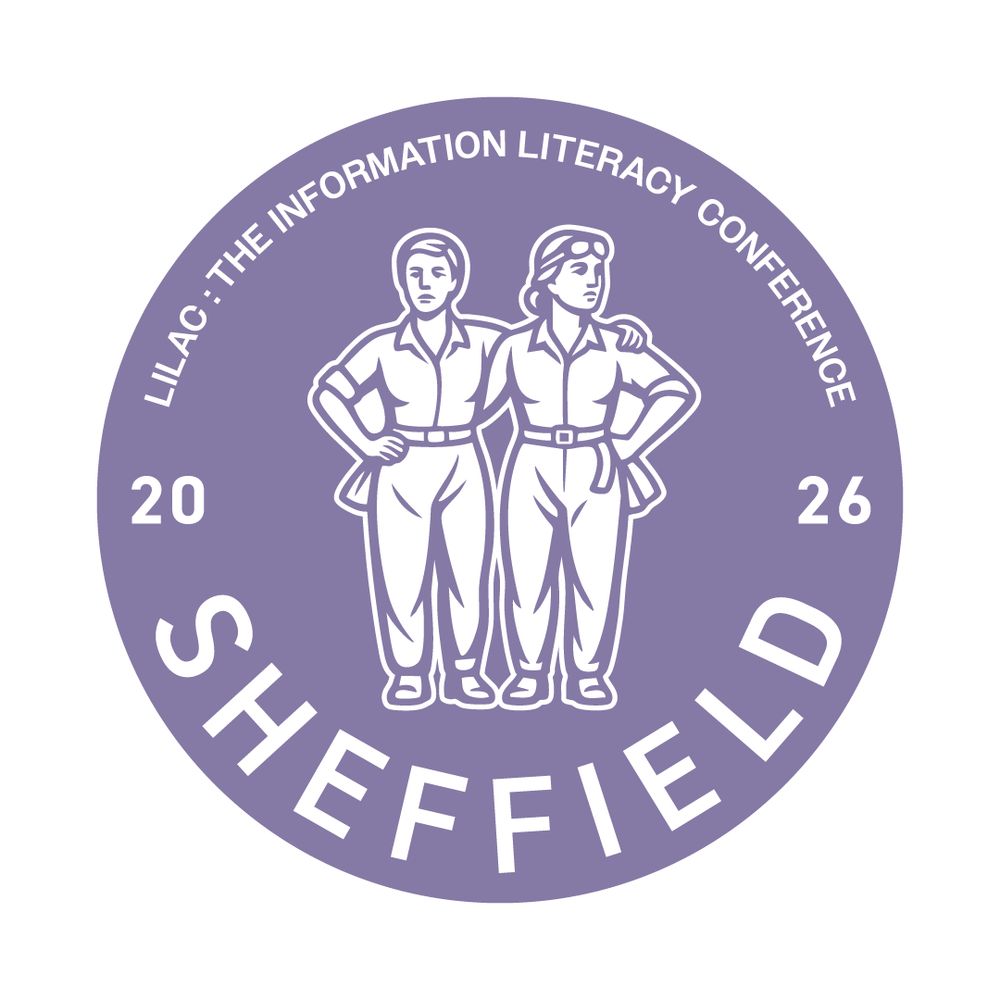
The logo for the LILAC 2026 conference. The logo is circular with a lilac background, all text within the circle is a white colour and all images are white with a lilac outline, to show detail. At the centre of the circle there are two female figures. They are stood facing forwards but looking in different directions. They are wearing overalls and boots. They both have a cloth hanging out of a pocket and the figure on the right has goggles on her forehead. They each have one arm around the other and their other hand is on their own hip. The figures are based on the Women of Steel bronze sculpture that commemorates the women of Sheffield who worked in the city's steel industry during the First World War and Second World War. It was created by the sculptor Martin Jennings. Above the figures are the words LILAC: The information literacy conference, below the figures is the word Sheffield - all words are in capital letters. To the left of the figures is the number 20 and to the right of the figures is the number 26.

Outside Looking In: What I’ll Miss At LILAC 2026

The annual LILAC conference is upon us, and unfortunately this writer won’t be attending. I’ve been perusing the programme like a kid looking through a misted toyshop window, wiping away the condensation from the glass with my woollen mittens and wishing I was inside, warm and overwhelmed with the options of wooden railways, licenced figurines […]

Outside Looking In: What I’ll Miss At LILAC 2026 Read More »
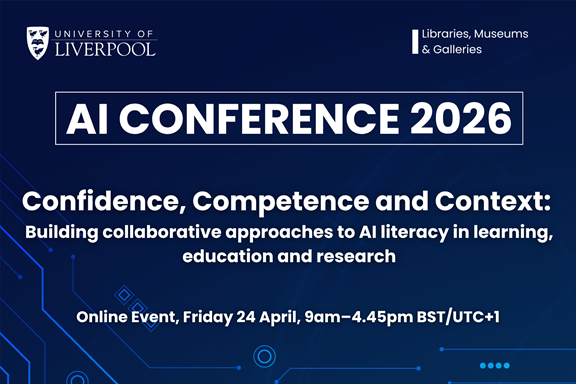
AI Conference 2026: Confidence, Competence and Context. Building collaborative appropaches to AI Literacy in learning, teaching and education. Online event, Friday 24th April, 9am to 4.45pm BST.

Confidence, Competence, and Context: AI Online Conference, 24th April 2026

The University of Liverpool’s Libraries, Museums and Galleries is set to host an international online conference, bringing together experts, educators and researchers from around the world to explore the rapidly evolving landscape of Artificial Intelligence. The AI Online Conference 2026, delivered via Microsoft Teams from 9am to 4.45pm BST (UTC+1) on Friday 24 April, 2026 will feature contributions

Confidence, Competence, and Context: AI Online Conference, 24th April 2026 Read More »

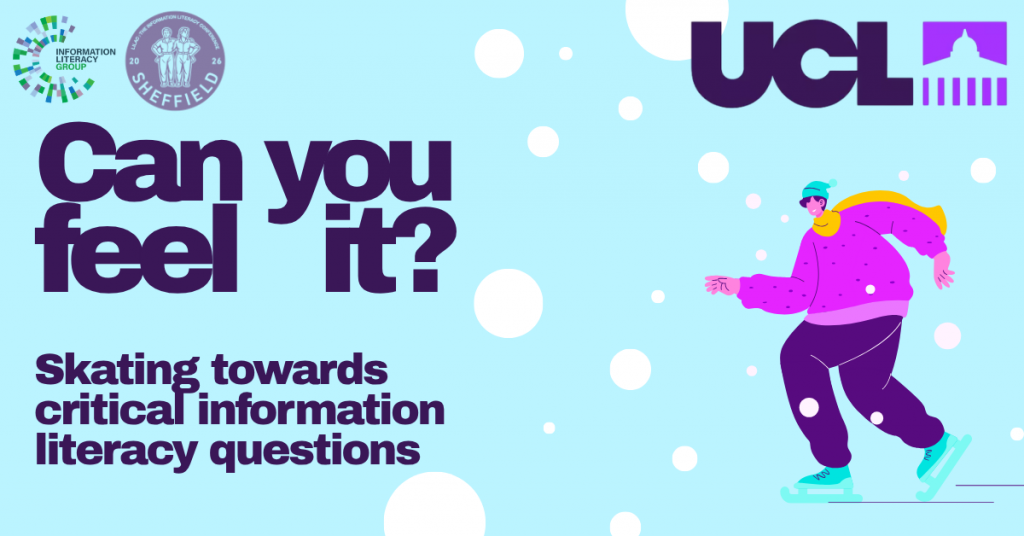
Can you feel it? Skating towards critical information literacy questions

Can you feel it? Skating towards critical information literacy questions

Thank you to UCL for providing our first sponsored blog post of the LILAC 2026 season! Over the last year, I have been taking ice-skating lessons. Now that I have progressed beyond the beginner stage (though you will still not be seeing me in a Spice Girl outfit à la Lilah Fear anytime soon, much

Can you feel it? Skating towards critical information literacy questions Read More »

Project report update: Reflection as a Means to Assess Information Literacy Instruction

Project Report Update: Reflection as a Means to Assess Information Literacy Instruction

After their recent project report, “Reflection as a means to assess information literacy instruction”, published in the December 2025 issue of the Journal of Information Literacy, Natalia Kapacinskas, Veronica Arellano Douglas, Erica Lopez, and Mea Warren share a project report update with us. Our Teaching & Learning department at the University of Houston Libraries has

Project Report Update: Reflection as a Means to Assess Information Literacy Instruction Read More »

Top Tips in Health Teaching: Critical Appraisal Training

Critical Appraisal Training: Top Tips in Health Teaching

The next blog in our Top Tips for Health Teaching series considers critical appraisal training. This was one of the presentations at our Knowledge Sharing Workshop event in September 2025, entitled “How I shed my armbands and began to enjoy swimming in the critical appraisal activities pool!”  and outlines the experiences of Sarah Gardner, Clinical

Critical Appraisal Training: Top Tips in Health Teaching Read More »

Top Tips in Health Teaching: From FEW to FAF: evolution of our searching training and teaching the Hub

From FEW to FAF: evolution of our searching training and teaching the Hub

The next blog in our Top Tips for Health Teaching series looks at a case study from Berkshire Healthcare NHS Foundation Trust. This was one of the presentations at our Knowledge Sharing Workshop event in September 2025 and focused on how we at Berkshire Healthcare Library and Knowledge Service have had to adapt and evolve

From FEW to FAF: evolution of our searching training and teaching the Hub Read More »

2026 IL award nominations on a calendar leaf

Have you decided who to nominate for the 2026 Information Literacy Award?

Nominations for the 2026 Information Literacy Award open in the new year. The award is open to all practitioners, researchers and academics working in the information literacy field in the UK, both individuals and teams, and recognises excellent practice. You can nominate colleagues or self-nominate, so why not start thinking about which person, team, project or initiative

Have you decided who to nominate for the 2026 Information Literacy Award? Read More »

Media and information literacy: a joint statement following the Curriculum and Assessment Review

Media and information literacy: a joint statement following the Curriculum and Assessment Review

Curriculum reforms will falter without media literacy funding for schools,  say 35+ experts close to the issue Over 35 organisations and experts warn that planned media literacy reforms will fail without  dedicated funding for schools The inclusion of teaching about ‘fake news and AI’ literacy in the revised curriculum for England  recently made headlines, highlighting

Media and information literacy: a joint statement following the Curriculum and Assessment Review Read More »

Transferability, Applicability, and Models of Information Behaviour by Andrew K Shenton

Transferability, Applicability, and Models of Information Behaviour

This post has been written for the Information Literacy Group website by Andrew K. Shenton. You can read Andrew’s latest article in the Journal of Information Literacy here. Over the last thirty years, I have undertaken various projects that have led to the development of models of information behaviour. Many have concentrated on children and

Transferability, Applicability, and Models of Information Behaviour Read More »